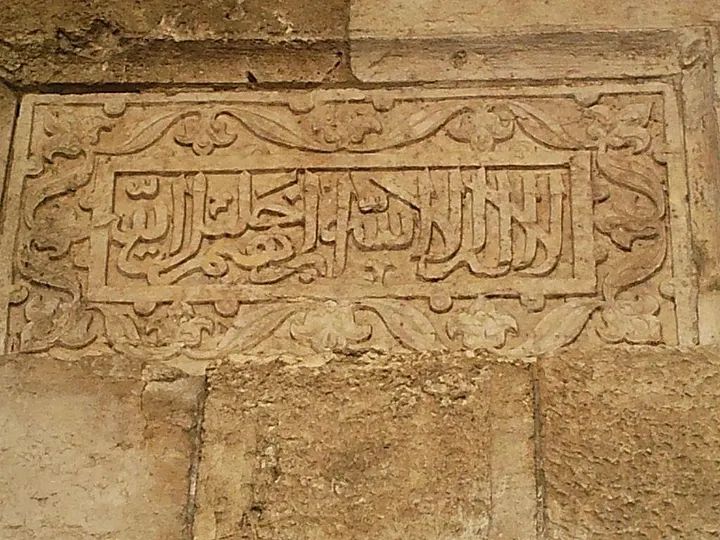

Prophet Ibrahim (peace be upon him) is presented in the Qur’an not merely as a prophet, but as a model personality to be followed in humanity’s journey of faith, intellect, morality, and submission. His life represents the human pursuit of truth, the discovery of that truth, and remaining loyal to it.
In this portrayal, the Qur’an describes Prophet Ibrahim as a hanif (pure monotheist), muwahhid (one who affirms the oneness of God), fully submissive, reflective, compassionate, courageous, and a guiding figure.
1. Being Hanif and a Pure Monotheist
The most fundamental characteristic of Prophet Ibrahim is his being hanif. Hanifiyyah means abandoning all false beliefs, false deities, and misguided paths, and turning solely to Allah. This turning is not just a belief choice, but a return to one’s essence—human nature (fitrah).
The Qur’an clearly states:
“Abraham was neither a Jew nor a Christian, but he was a hanif Muslim, and he was not among the polytheists.” (Āl ‘Imrān 3:67)
This verse shows that Prophet Ibrahim is not confined to any historical or cultural identity; rather, he represents truth itself. His faith is not shaped by societal norms but is a pure submission directed toward truth.
Hanifiyyah is also described in the Qur’an as the religion of fitrah:
“Set your face toward the religion as a hanif—the natural disposition upon which Allah has created mankind.” (Rūm 30)
This means that the path of Prophet Ibrahim is the one most aligned with human nature. The human soul is created with the capacity to recognize truth, and hanifiyyah is the pure expression of that capacity. Therefore, his hanif nature is not just an individual choice, but a universal direction aligned with the essence of humanity.
Islamic sources also affirm that the belief preached by Prophet Ibrahim is called “hanifiyyah,” emphasizing his complete detachment from polytheism and total devotion to Allah (Şaban Kuzgun, Prophet Ibrahim and Hanifism According to Islamic Sources).
2. A Personality Who Struggled for Monotheism
Prophet Ibrahim was not only a believer but also a prophet who openly defended, spread, and struggled for his belief. His life demonstrates that monotheism is not merely a belief held in the heart, but requires an active stance against false systems embedded in society.
He opposed the idolatry of his people and invited them to think and question:
“What are these statues to which you are devoted?” (Al-Anbiyā 21:52)
This was not just criticism, but a powerful call to use reason.
Breaking the idols was not merely a physical act; it was a symbolic stand against falsehood and a declaration of truth. It demonstrated that what people considered sacred was actually powerless and insignificant.
His struggle brought him into direct conflict with his people, leading to severe trials. The most striking example is when he was thrown into the fire. Yet Allah commanded:
“O fire, be coolness and peace upon Abraham.” (Al-Anbiyā 21:69)
This shows that he was a personality willing to sacrifice everything for his faith, even his life.
Islamic sources emphasize that he called people to monotheism across different regions, struggled against idolatry, and endured great hardships in this cause (Şaban Kuzgun).
3. Being a Person of Intellect and Reflection
One of Prophet Ibrahim’s most remarkable qualities is his active use of intellect to reach the truth. His journey of faith was not based on blind acceptance, but on questioning, thinking, and searching.
The Qur’an narrates his reflection on the stars, the moon, and the sun:
“I do not like those that set.” (Al-An‘ām 6:76)
This shows his rejection of the temporary in search of the eternal.
He observes, reflects, and concludes. He realizes that changing and temporary things cannot be divine, and through rational reasoning, he turns toward the Absolute—Allah.
This represents the Qur’anic model of faith:
Faith is not blind imitation, but a conscious conviction reached through intellect and reflection.
Islamic sources also highlight that his belief was not based on imitation but on conscious understanding, forming a core principle of hanifiyyah.
4. Complete Submission to Allah (Islam)
One of the most defining qualities of Prophet Ibrahim is his unwavering and absolute submission to Allah. His life shows that faith is not just a verbal claim but a commitment that does not change even in the most difficult circumstances.
“When his Lord said to him, ‘Submit,’ he said, ‘I have submitted to the Lord of the worlds.’” (Al-Baqarah 2:131)
His submission is evident in every aspect of his life.
The most powerful example is the sacrifice incident. Despite the immense difficulty of the command, he moved to fulfill it without hesitation:
“O my son, I have seen in a dream that I must sacrifice you…” (As-Sāffāt 37:102)
This demonstrates that his love for Allah surpassed everything else.
The concept of Islam itself means submission, and Prophet Ibrahim embodies this meaning perfectly. Islamic sources emphasize his patience and trust in Allah, highlighting that this submission forms the foundation of his prophetic character (Şaban Kuzgun).
5. Being Compassionate and Gentle
Prophet Ibrahim was not only a strong figure of struggle but also a deeply compassionate and gentle person. Even while defending truth, he maintained softness and empathy.
“Indeed, Abraham was forbearing, tender-hearted, and constantly turning to Allah.” (Hūd 11:75)
His compassion is most evident in his relationship with his father. Despite his father’s idolatry and opposition, he remained respectful, avoided harsh language, and invited him gently to the truth. He even prayed for him.
This shows that his approach was rooted in love and understanding. He did not force people, but appealed to their hearts.
Similarly, his communication with his people was thoughtful and inviting rather than harsh. This reflects a balanced personality combining struggle with mercy and wisdom.
Islamic sources emphasize that his compassion must be understood alongside his strength, showing him as a complete moral example (Şaban Kuzgun).
6. Being a Guide and Role Model (Imam)
Prophet Ibrahim is not just an individual but a guide and role model for humanity.
“I will make you a leader (imam) for the people.” (Al-Baqarah 2:124)
Here, “imam” refers to a leader in faith, morality, and life—not just prayer.
The Qur’an also states:
“Indeed, Abraham was a nation in himself.” (An-Nahl 16:120)
This highlights his immense influence—he embodied the values of an entire community.
His life serves as:
- A model of faith
- A model of morality
- A model of struggle
He stood for truth even when alone, making him a timeless example.
Islamic sources affirm that his leadership stems from his faith, submission, and moral integrity (Şaban Kuzgun).
7. A Servant Who Prayed and Maintained a Strong Connection with Allah
Prayer played a central role in Prophet Ibrahim’s life. It was not occasional, but a continuous connection with Allah.
“My Lord, make me one who establishes prayer…” (Ibrahim 14:40)
“Our Lord, forgive me, my parents, and the believers…” (Ibrahim 14:41)
His prayers were not limited to himself. He prayed for his family, his descendants, and all believers, reflecting a universal consciousness.
His supplications show a deep sense of responsibility for humanity and a sincere connection with Allah.
Islamic sources describe his prayer life as a reflection of his living and profound faith (Şaban Kuzgun).
8. A Prophet Who Took Part in the Construction of the Kaaba
Prophet Ibrahim played a crucial role in establishing the central place of worship.
“And [remember] when Abraham and Ishmael were raising the foundations of the House…” (Al-Baqarah 2:127)
This act represents more than building a structure; it signifies establishing a universal center of worship dedicated to Allah.
The Kaaba is a lasting symbol of monotheism, unity, and devotion.
Their prayer during construction reflects sincerity and humility, showing that even in great acts, acceptance from Allah is the ultimate goal.
This makes Prophet Ibrahim not only a preacher of monotheism but also one who established its physical and communal foundation.
Conclusion
When all these qualities are considered together, Prophet Ibrahim represents the complete model of a human being as described by the Qur’an. He is a pure monotheist devoted to Allah, a thinker who reaches truth through reflection, a courageous figure who defends truth, a compassionate individual who treats others with mercy, a servant fully submitted to Allah, a person who maintains a strong connection through prayer, and a guide for all humanity.
His life shows that faith is not merely theoretical; it becomes meaningful when combined with intellect, morality, struggle, and submission. His path represents the human journey of seeking truth, finding it, and remaining loyal to it.
For this reason, Prophet Ibrahim is not only a figure of the past but a timeless, universal model for all humanity. Islamic sources emphasize that his personality embodies the unity of monotheism, intellect, submission, and morality (Şaban Kuzgun).